Utah's only venomous lizard is a slow, secretive desert survivor - and southwestern Washington County is the very northern edge of its world.
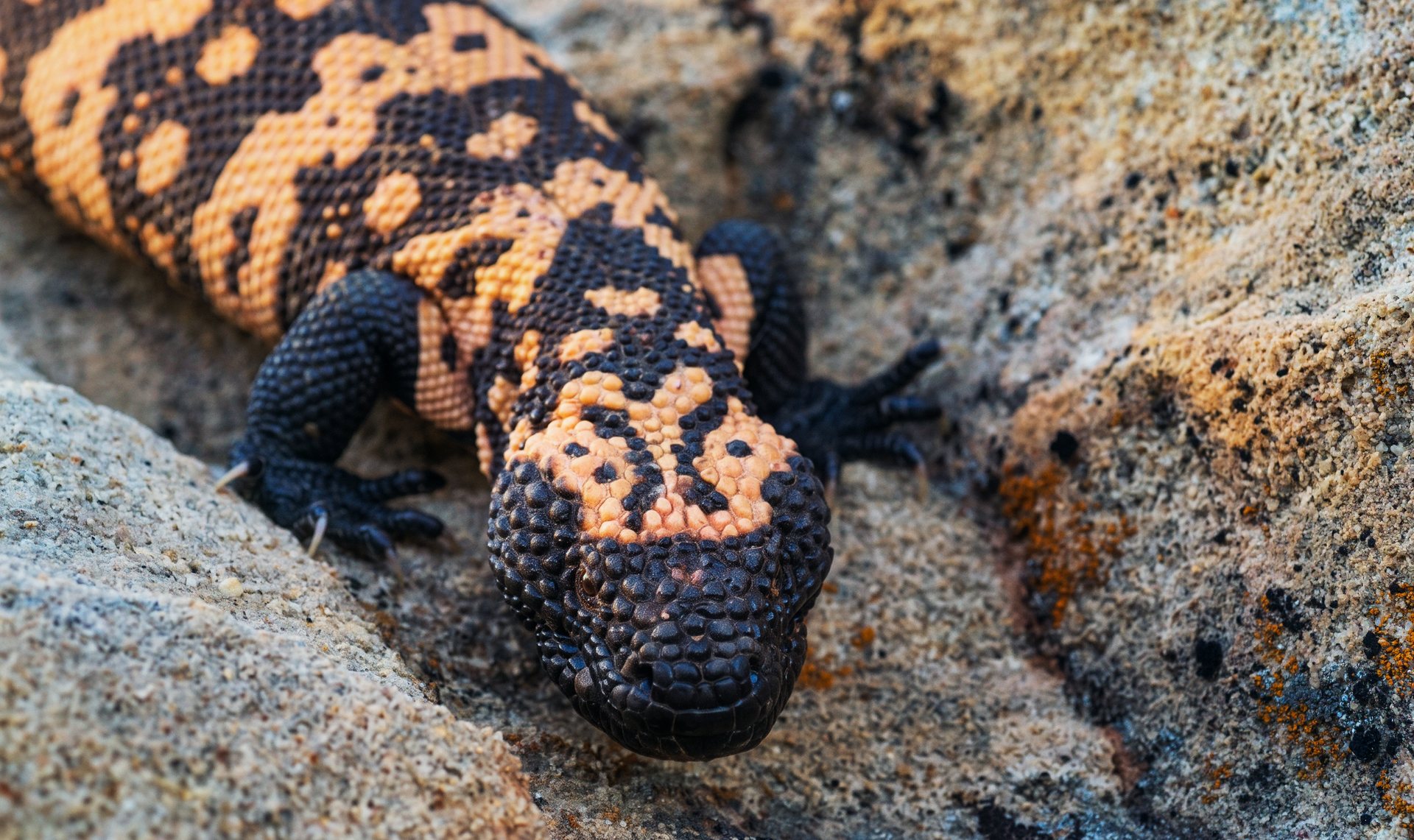
The Gila monster (Heloderma suspectum) is the largest lizard native to the United States and one of only two venomous lizards native to North America. It is unmistakable: a heavy, sausage-shaped body wrapped in bead-like scales and painted in bold black and salmon-orange - a living warning sign. Around St. George you are standing at the far northern tip of where this animal has ever lived, which makes the population here small, isolated, and worth protecting.
A beaded desert dweller
Those bumpy "beads" are tiny bones in the skin called osteoderms, giving the Gila monster its armored look. The bold black-and-orange pattern is aposematic - a visual warning to predators that this animal is not worth the trouble. Adults reach about 20 inches and up to two pounds, moving with a slow, deliberate waddle rather than the quick dart of most desert lizards.
Venom that became medicine
Unlike a snake, a Gila monster doesn't strike and inject - it delivers venom by chewing, working grooved teeth in its lower jaw as it holds on. The venom is defensive, not for hunting. Remarkably, a protein in that venom, exendin-4, became the basis for exenatide, a widely used medication for type 2 diabetes. A slow, sugar-regulating desert lizard helped teach medicine how to manage blood sugar in people.
A life mostly underground
Gila monsters spend an estimated 90-95% of their lives below ground, sheltering from heat and cold in burrows. They surface for only a few weeks or months, mostly in spring. In a whole year one may eat just a handful of large meals - raiding nests for eggs and young birds and rodents - and store the surplus as fat in its thick tail. That low-and-slow lifestyle helps them live 20 years or more.
Not a threat - and protected
Despite the fearsome reputation, Gila monsters are reluctant, slow, and rarely encountered; bites are almost always the result of someone handling one. In Utah it is illegal to collect, harm, harass, or relocate a Gila monster. If you're fortunate enough to see one in the wild, the right move is simple: stop, give it plenty of space, never touch it, and let it continue on its way.
Why it matters here
Edge-of-range populations like this one carry outsized importance - they are how a species holds and sometimes expands its territory. The Gila monsters of Greater Moe's Valley are among the northernmost on Earth. Keeping Zone 6 intact keeps their habitat intact, and protects a genuinely rare corner of this animal's story.
One rare neighbor among many
The Gila monster shares this desert with the tortoise, the dwarf bear-poppy, and a whole community of rare life. Protecting the land protects all of it.
Photograph and page for the Save Greater Moe's Valley effort. The Gila monster is protected under Utah state law; treat any sighting as something to observe from a distance, never to disturb.