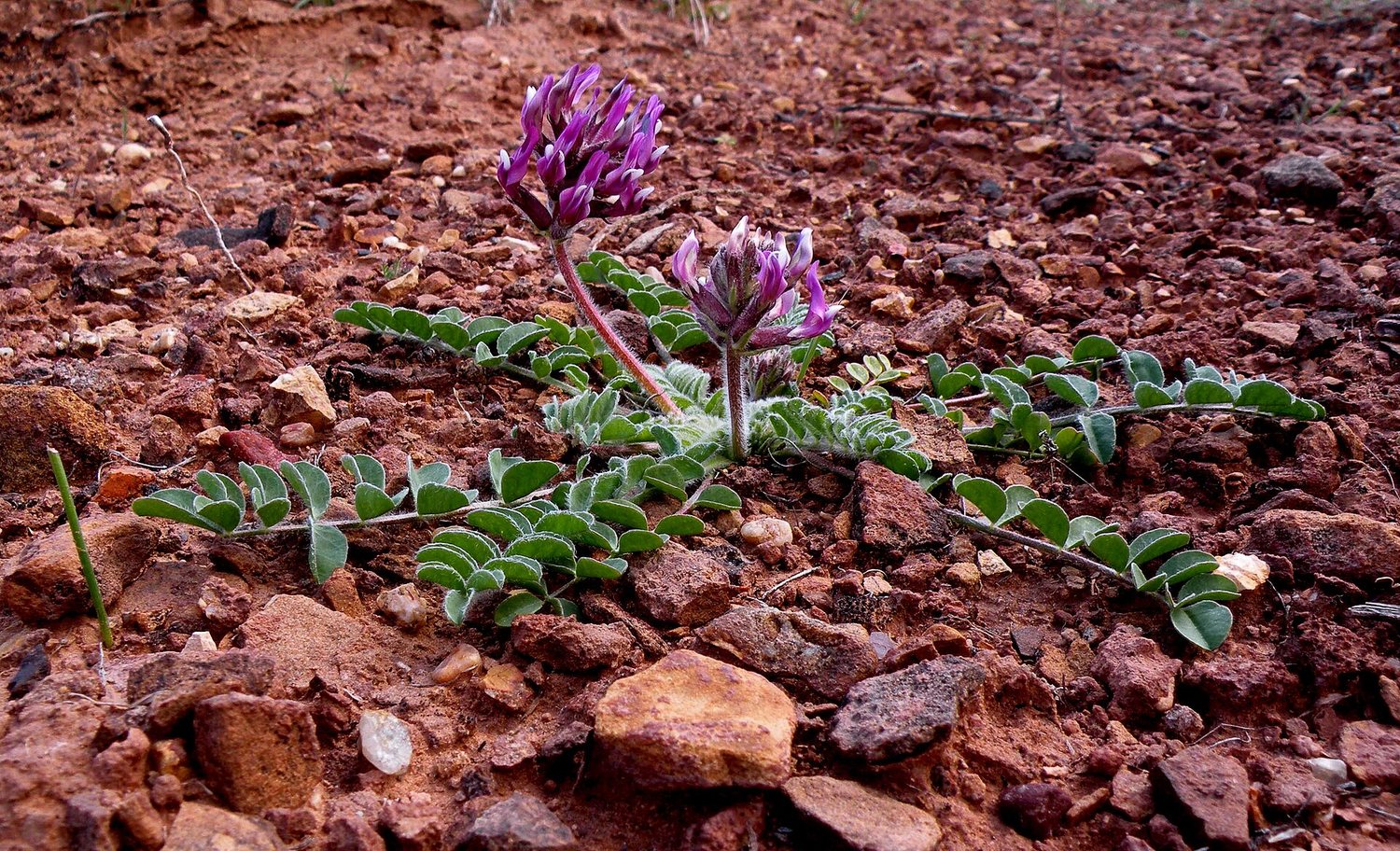
Two small pea-family wildflowers that exist almost nowhere but this one corner of Utah.
The Shivwits milkvetch (Astragalus ampullarioides) and Holmgren milkvetch (Astragalus holmgreniorum) are among the rarest plants in the region. Both are essentially Washington County specialties, clinging to a few small populations on very particular soils - and both were listed as endangered in 2001.
A tiny global range
Shivwits milkvetch is a Washington County endemic; Holmgren milkvetch barely reaches across the line into Arizona. Between them they occupy only a handful of sites, which makes every population count.
Picky about the ground
Like many rare plants here, the milkvetches are soil specialists - they grow on specific clay and gypsum soils and little else. That fussiness is exactly what makes them vulnerable: there's nowhere else for them to go.
Small numbers, big stakes
With so few plants in so few places, a single lost site can be a meaningful fraction of the entire species. Habitat here is disproportionately important to their survival.
What threatens them
Development, off-road vehicles, invasive weeds, and drought all press on the milkvetches' limited habitat - the same pressures facing the rest of Zone 6.
One rare neighbor among many
The rare milkvetches shares this desert with a whole community of rare life. Protecting the land protects all of it.
Page for the Save Greater Moe's Valley effort. Both milkvetches are federally endangered; stay on trails and never disturb desert plants or soils.