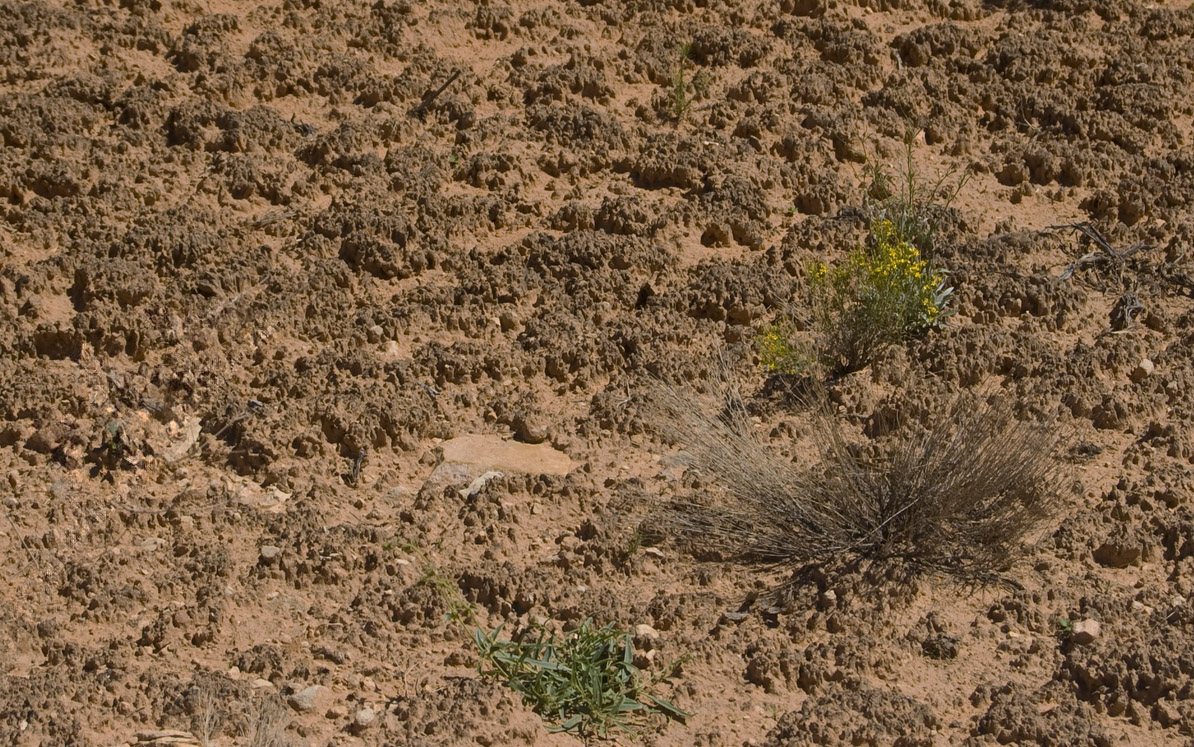
Much of the “dirt” out here is alive - and it's the reason rare plants can grow at all.
Biological soil crust is the living skin of the desert: a knobby, dark layer of cyanobacteria, lichens, and mosses that covers the ground between the plants. It's easy to dismiss as crusty dirt, but it's doing quiet, foundational work that the whole ecosystem is built on.
A living carpet
The crust is a community of cyanobacteria, lichens, and mosses woven through the top layer of soil. Those organisms knit the loose sand together and hold it in place against wind and rain.
It feeds the desert
Crust organisms fix nitrogen from the air and add it to the soil - a natural fertilizer in a place with almost none. That's a big part of why rare, fussy plants like the bear-poppy can take root here at all.
Slow to build, fast to break
Biological soil crust grows about a millimeter a year. A single footprint or tire track can undo decades of growth, and full recovery can take a century or more. There is no quick fix once it's crushed.
Why staying on trails matters
This is the real reason to keep to established trails: the ground between them isn't empty - it's alive, and it's holding the whole desert together. Protecting the crust protects everything that grows from it.
One rare neighbor among many
The living soil shares this desert with a whole community of rare life. Protecting the land protects all of it.
Page for the Save Greater Moe's Valley effort. Please stay on established trails - biological soil crust is easily destroyed and takes generations to recover.